A red that finishes in a short season
Cabernet Franc gets maligned as a blending grape elsewhere. In Niagara, it is the answer.
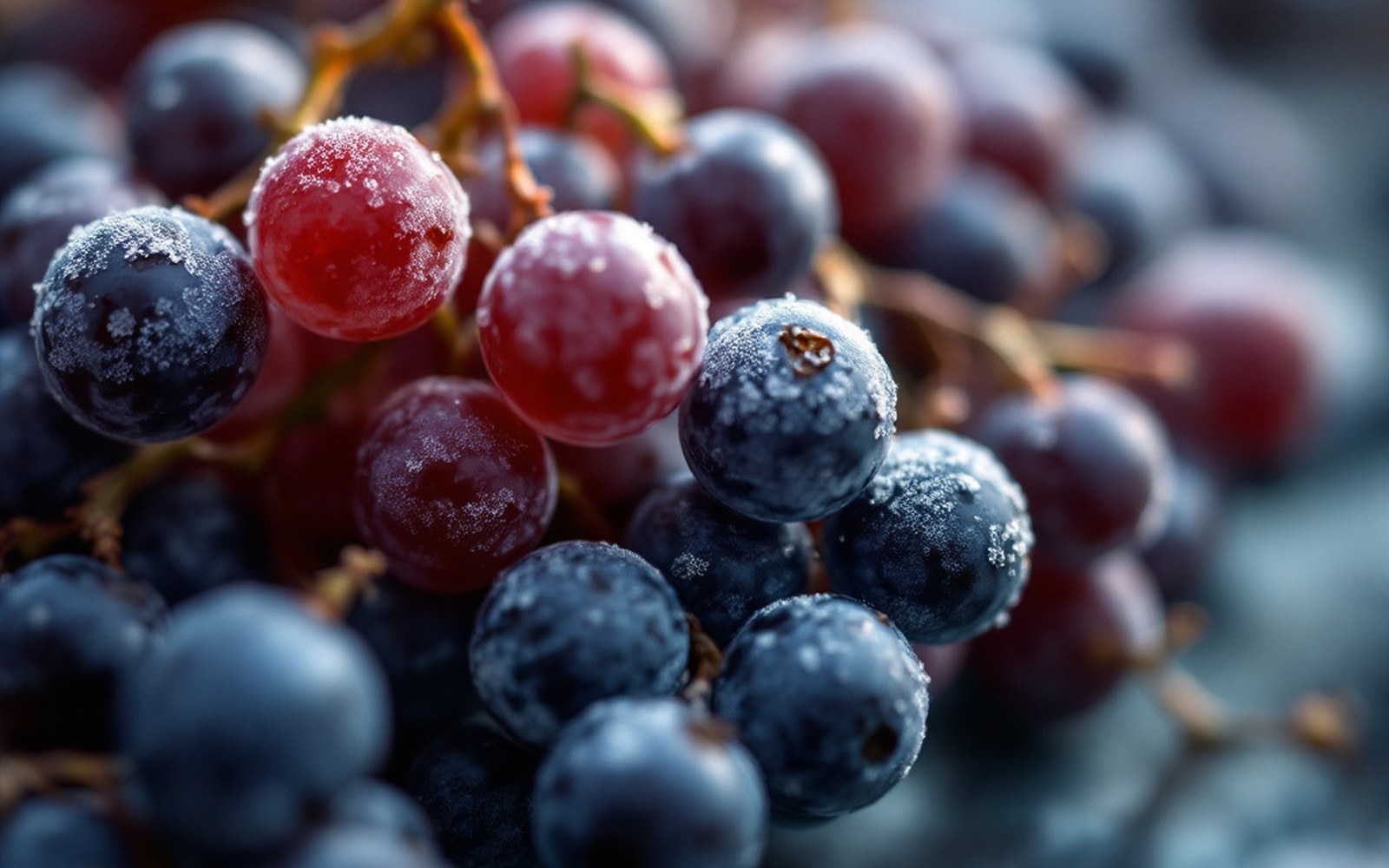
Skins with the bloom still on them. Cabernet Franc colours and softens before the season closes.
The question of which red
Every wine region eventually settles on the grape that fits it, the one that the climate does not merely tolerate but actively shapes into something worth the trouble. In Burgundy that convergence took centuries and a monoculture. In Niagara the answer has emerged in a shorter span of history: Cabernet Franc, earlier-ripening parent of Cabernet Sauvignon, is the Vitis vinifera red that the peninsula's short growing season can actually finish.
The comparison with Cabernet Sauvignon is the starting point. Both belong to the same parentage — Cabernet Sauvignon being a natural cross of Cabernet Franc and Sauvignon Blanc — but Cabernet Sauvignon needs roughly two to three weeks more warmth to reach full physiological ripeness than Cabernet Franc does. In a region where the frost-free growing window is already working at the margins of what Vitis vinifera tolerates, two to three additional weeks is not a minor inconvenience. It is often the difference between a ripe berry and a green one. The degree days that accumulate between budbreak and harvest here are simply not enough, in most years, to bring Cabernet Sauvignon through cleanly. Cabernet Franc exits the season ahead of that problem.
Where the ripening happens
The Niagara Peninsula's thermal geometry matters enormously here. Lake Ontario to the north delays the spring frosts and extends the autumn, and the Niagara Escarpment acts as a backstop, holding the lake-tempered air over the vineyards rather than letting it drain away. This is the mechanism — described in detail as the lake effect — that makes vinifera viticulture possible at this latitude at all. Cabernet Franc benefits from the extended autumn more directly than almost any other red: the grape is not a heat-seeker in the way that Syrah or Cabernet Sauvignon is; it builds flavour at moderate temperatures and holds its acid through a slow, cool ripening. A warm September and a dry October in Niagara is almost exactly what the variety is built for.
The sub-appellations on the escarpment concentrate this advantage. The Beamsville Bench and the Twenty Mile Bench — terraced limestone-and-clay platforms above the valley floor — drain cold air downslope and catch more solar radiation than flat ground. Cabernet Franc planted on these sites consistently ripens earlier and more evenly than the same variety grown on heavier soils closer to the lake. The Escarpment's influence also manifests in the Four Mile Creek sub-appellation to the east, where the terrain opens toward the lake and the soils shift toward sandy loam, giving a different but equally complete ripening curve.
None of this makes Cabernet Franc immune to Niagara winters. Vinifera vines are vulnerable to sustained cold below approximately −15°C to −20°C, and the Niagara Peninsula does reach those temperatures in hard years. The risk of winter kill is real, and many growers respond with the traditional precaution of hilling up — mounding soil over the graft union each autumn to insulate the point where cultivated scion meets hardy rootstock. The survival of the vine through February matters as much as the ripening curve in September.
What the grape actually does here
Across Loire Valley appellations like Chinon, Bourgueil and Saumur-Champigny — where Cabernet Franc has its most celebrated expression as a standalone variety — the grape produces wines marked by firm but not aggressive tannins, high-toned red fruit, and a distinctive mineral or graphite note that critics associate partly with cool, clay-limestone soils. Cabernet Franc in the Loire ↗ tends toward violet aromatics, sometimes a lifted herbaceous quality that is a property of the variety rather than a flaw, and a brightness of acidity that ages well.
The degree days that accumulate between budbreak and harvest here are simply not enough, in most years, to bring Cabernet Sauvignon through cleanly.
Niagara Cabernet Franc shares the structural framework. The tannin profile is medium rather than imposing, the acidity remains lively because the growing season does not bake it away, and the aromatic character tilts toward fresh red fruit and bell pepper — the pyrazines that are natural to the variety — with the proportion of green notes determined by whether the vintage allowed full phenolic ripeness. A year when warmth arrives early and holds through October will produce fruit with more dark cherry and spice character and less herbaceous lift. A cool, compressed year shifts the balance toward the brighter, more Loire-like register. Both outcomes are legitimate; neither is a failure of the variety.
This is the characteristic that sets Niagara Cabernet Franc apart from its role in Bordeaux or in New World blends. In Bordeaux it is a supporting player, softening Cabernet Sauvignon or extending blends when the dominant variety falls short. In Niagara the relationship inverts: Cabernet Franc is frequently the lead grape, sometimes blended with Merlot (which also ripens earlier than Cabernet Sauvignon), but often made as a single-varietal wine because it has enough depth to stand on its own. The discipline of finishing the grape fully in a compressed season produces a wine with structure rather than bulk, length rather than weight.
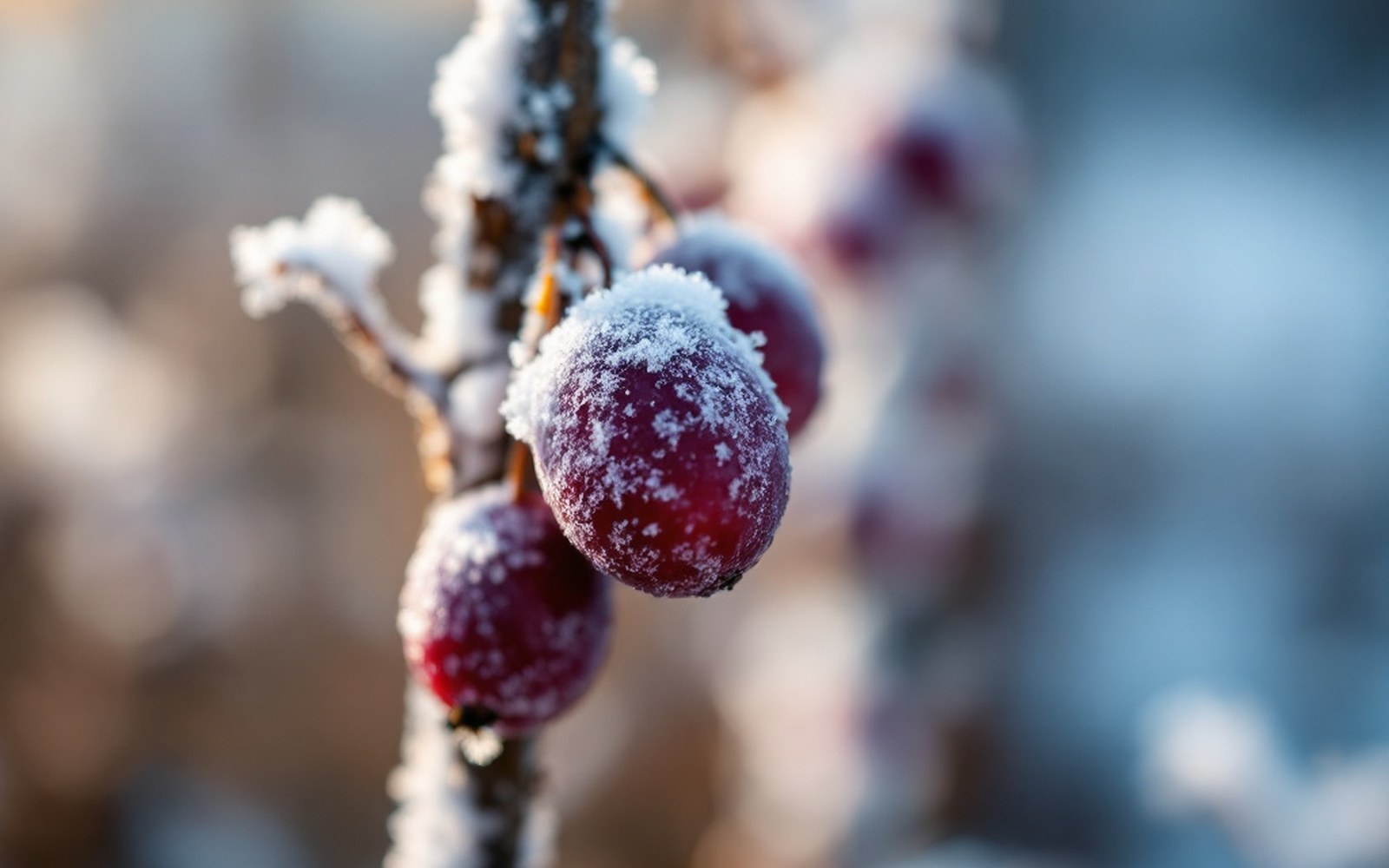
Thick-skinned fruit that hangs through freezing weather without splitting: why Vidal dominates icewine.
The VQA appellation system, which began as a voluntary standard in 1988 before receiving statutory backing, requires that wines labelled with a sub-appellation like Beamsville Bench or Twenty Mile Bench contain a minimum percentage of fruit from that named area and meet defined grape and production standards. For Cabernet Franc declared under a sub-appellation, the origin claim is not marketing language; it reflects a measurable set of growing conditions that affect the finished wine. Brock University's Cool Climate Oenology and Viticulture Institute ↗ has produced ongoing research into which vinifera varieties and which sites within the peninsula produce the most complete ripening — and Cabernet Franc appears consistently in that work as among the most reliably successful of the serious red varieties.
The cellar treatment Niagara producers apply to Cabernet Franc varies. Whole-cluster fermentation, borrowed from Burgundy practice, preserves a stemmy, savoury quality that suits the variety's natural structure. Oak usage tends toward the moderate — the grape's transparency means heavy toast can flatten its aromatic character. Some producers work with concrete or large-format oak to preserve the fruit expression intact. What most of them share is a recognition that Cabernet Franc in Niagara does not need to be pushed toward a bigger style it cannot sustain: the goal is to complete what the season started, not to add what the season could not provide.
The result is a red that occupies a specific and honest place in the map of cool-climate viticulture. Not trying to be Bordeaux. Not apologising for the latitude. Cabernet Franc ↗ earns its standing here the way any grape earns standing anywhere — by fitting the place better than the alternatives.