Ripening is a heat budget, and here it is tight
Every grape variety has a thermal price tag. In Ontario, the account is rarely flush.
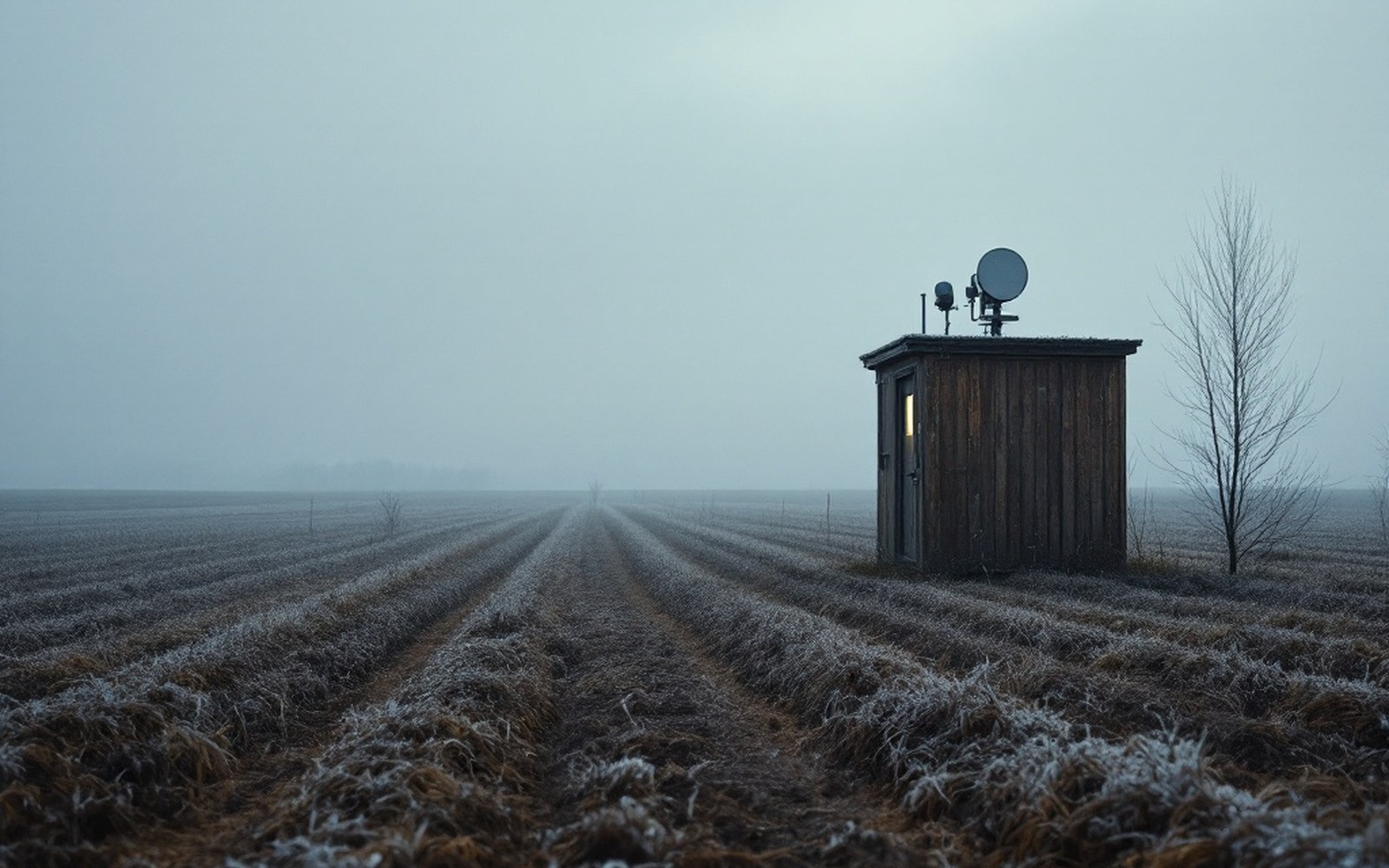
An instrument shelter in the rows. Warmth is a budget here, and this is where it gets counted.
The arithmetic of warmth
A growing degree day (GDD) is a simple unit: if the mean temperature on a given day exceeds 10°C — the threshold below which the grapevine does essentially no useful growing — the surplus is counted. A day with a mean of 16°C contributes six degree days. Multiply that across a season running roughly from May through October and you have the heat budget a site actually has to spend.
The Niagara Peninsula typically accumulates between 1,050 and 1,400 GDD ↗ across a growing season, putting it squarely in what viticulturists call Region I–II on the Winkler scale — cool to moderately cool, in the same thermal neighbourhood as Burgundy or the Rhine valley rather than Bordeaux or the Rhône. Some years the account runs close to Burgundy's; others, it barely makes it. That margin is the whole story of cold-climate viticulture in Ontario.
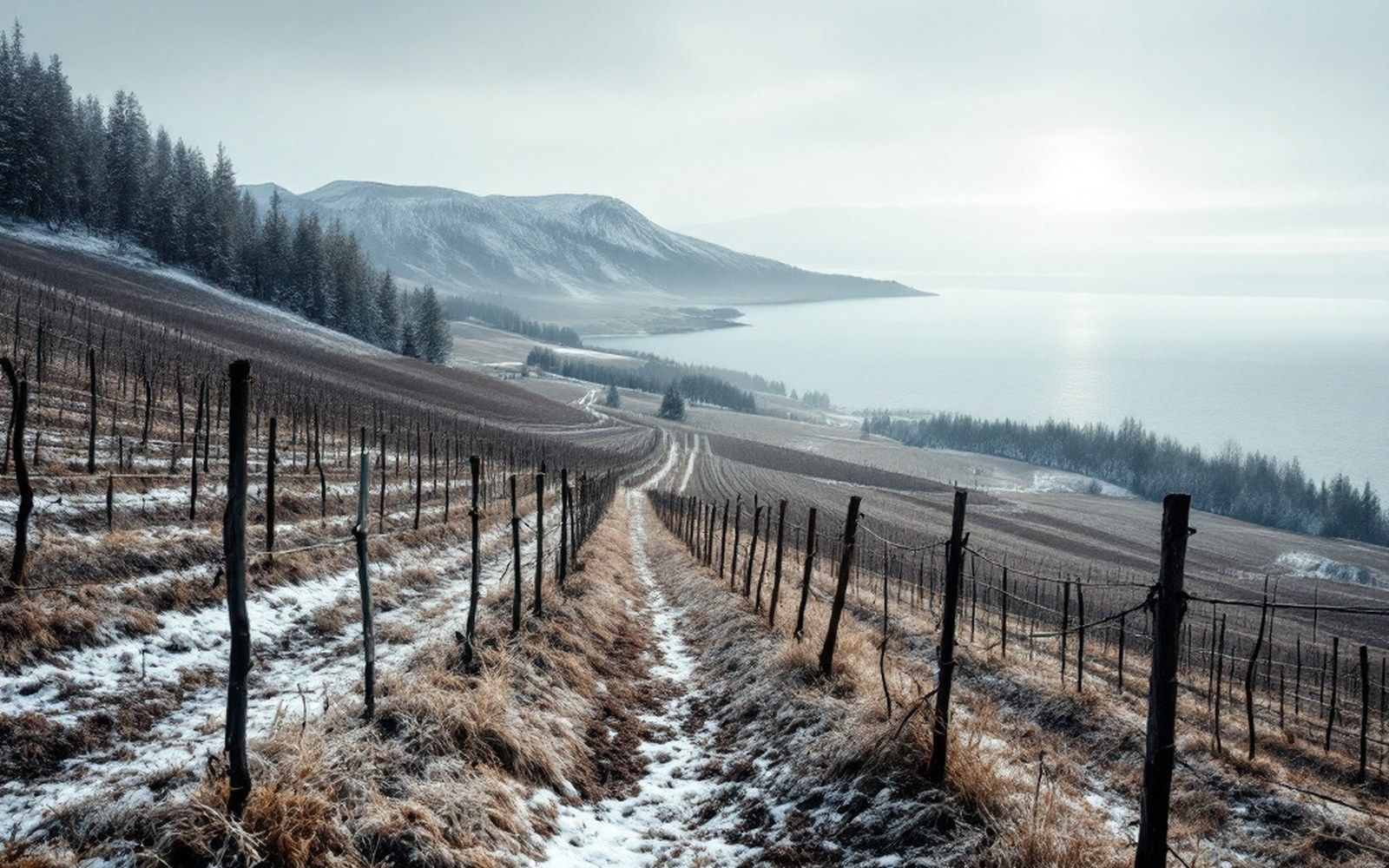
The vineyard strip: escarpment behind, lake in front, three to seven kilometres of ground in between.
The Lake Ontario shoreline, the Niagara Escarpment, and the named benches — Beamsville Bench, Twenty Mile Bench — each exploit the same basic physics to stretch the budget a little further. The lake delays both spring frost and autumn frost by storing summer heat and releasing it slowly; the escarpment traps that moderated air against the slope. The result is a frost-free window of around 170 to 190 days along the Niagara Escarpment, compared with significantly shorter windows further inland or north. It is still not long by any Mediterranean standard. Every degree day counts.
What the budget buys — and doesn't
Grape varieties are priced in degree days as surely as anything in a market. Riesling and Chardonnay can complete their season comfortably within the Niagara budget in most years. Pinot Noir is achievable but demands a sheltered, south-facing slope. Cabernet Franc, which ripens earlier than Cabernet Sauvignon, sits near the upper affordable limit for reds in a typical year. Cabernet Sauvignon itself is a stretch — it can ripen fully only in the warmest sites in the warmest vintages, which is why it is an occasional achievement rather than a staple. The budget enforces the variety list; growers who ignore it gamble on a run of good years and eventually lose.
This is not a counsel of defeat. A tight heat budget, managed intelligently, produces wines with structural acidity that warmer climates cannot replicate. When ripeness is earned rather than assumed, sugars accumulate more slowly relative to acid and flavour compounds, which is precisely the character that makes cool-climate wines distinctive. The constraint is the point.
When the budget runs short, producers have options, though none are free. Canopy management — keeping foliage open so sunlight reaches the fruit zone — extracts every available degree day from what the season offers. Hang time ↗ stretches into October and, in some varieties, November; the lake's moderating influence makes this possible where frost would otherwise end the conversation. For styles where concentration matters more than freshness, appassimento — drying harvested bunches to intensify sugars — compensates for incomplete field ripening, borrowing a technique from Northern Italy and applying it to an Ontario reality.
Some years the account runs close to Burgundy's; others, it barely makes it.
And then there is icewine, the discipline that converts the budget's most dramatic failure into its most celebrated success. When a vintage delivers healthy, ripe fruit, the grapes left hanging into December freeze naturally, water crystallises out, and the sugar-to-volume ratio climbs beyond anything a warm-climate harvest could produce. The VQA rules require harvest at or below −8°C ↗, with pressing also at that temperature, so the style is genuinely a product of Ontario's cold rather than a workaround for it.
The Brock University Cool Climate Oenology and Viticulture Institute, embedded in the Niagara Peninsula, exists partly to study how growers can manage exactly this margin — tracking degree day accumulation across sub-appellations, mapping frost risk, and refining the site-selection decisions that determine whether a given variety will reliably ripen. The heat budget is, in the end, a question of geography: where you plant, and whether that place has enough warmth to pay the variety's price.