The grape the climate was made for
Riesling asks for what Niagara actually has: a cool growing season, a long autumn, and cold nights that preserve what warm afternoons build.
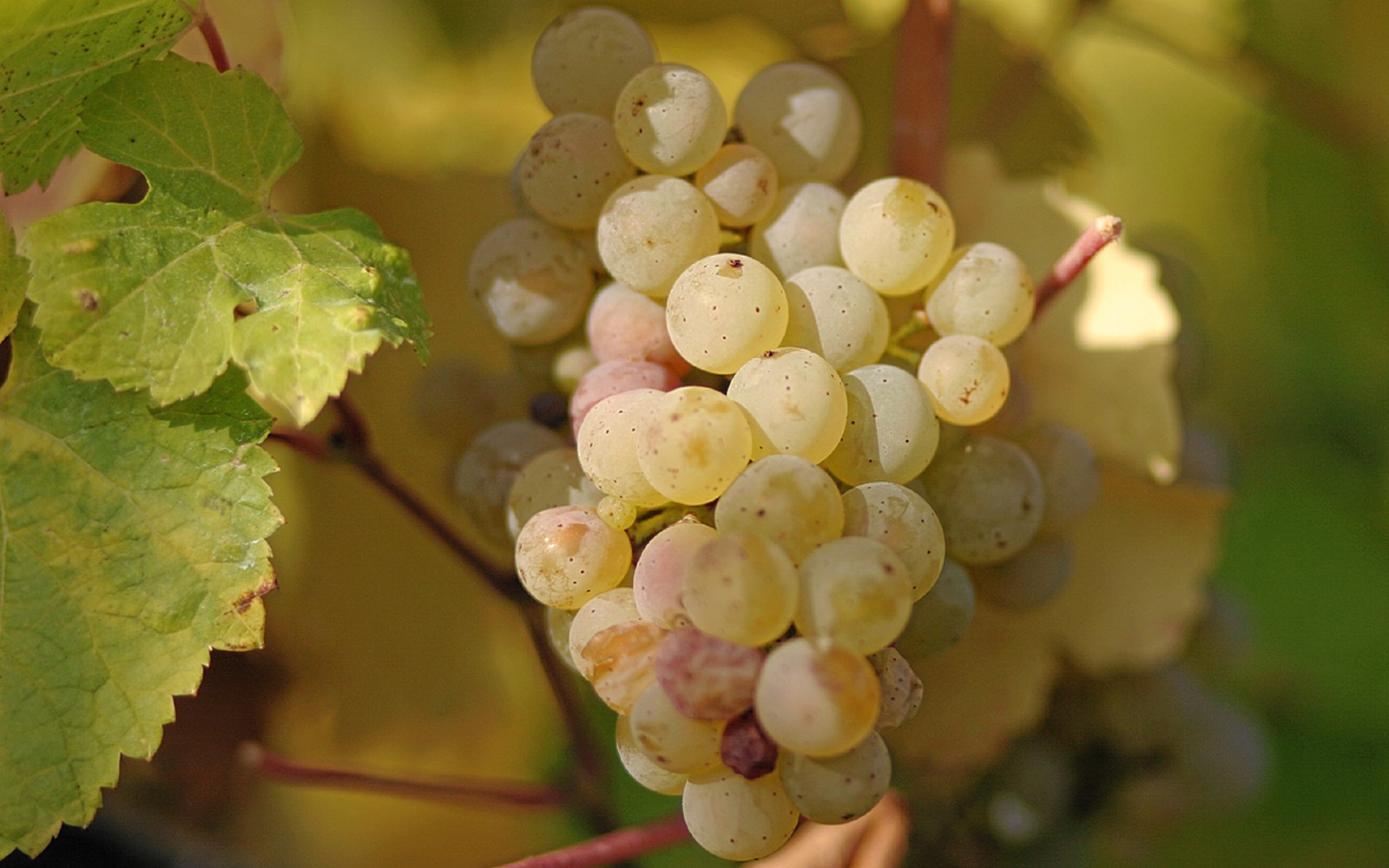
What Riesling needs, and why Niagara provides it
Riesling is not a forgiving grape. It ripens late — later than Chardonnay, later than Pinot Noir, often into October and sometimes beyond — which means any region that wants to grow it seriously must have a long, temperate autumn with enough warmth to finish the season but enough chill to keep the acid intact. Clip the season too short and the sugars never accumulate. Let the days run warm and the acidity collapses into flat, heavy fruit. Riesling needs the middle path: accumulated warmth measured in growing degree days that climbs high enough, but slowly, with nights cool enough to preserve tartrate and malate through the process.
The Niagara Peninsula provides exactly this, and the mechanism is double. Lake Ontario ↗ stores summer heat and releases it slowly through autumn, pushing the first autumn frost date later than the continental climate surrounding the region would produce on its own. The Niagara Escarpment deflects cold air drainage from the north shore, and the inversion layer it creates keeps temperatures over the vineyard floor measurably warmer on radiation-frost nights than exposed sites a few kilometres inland. Together they extend the growing season by weeks — the weeks Riesling specifically requires. Other vinifera varieties benefit from this arrangement, but Riesling exploits it most precisely, because its requirements match the particular shape of what the lake and the cliff produce.
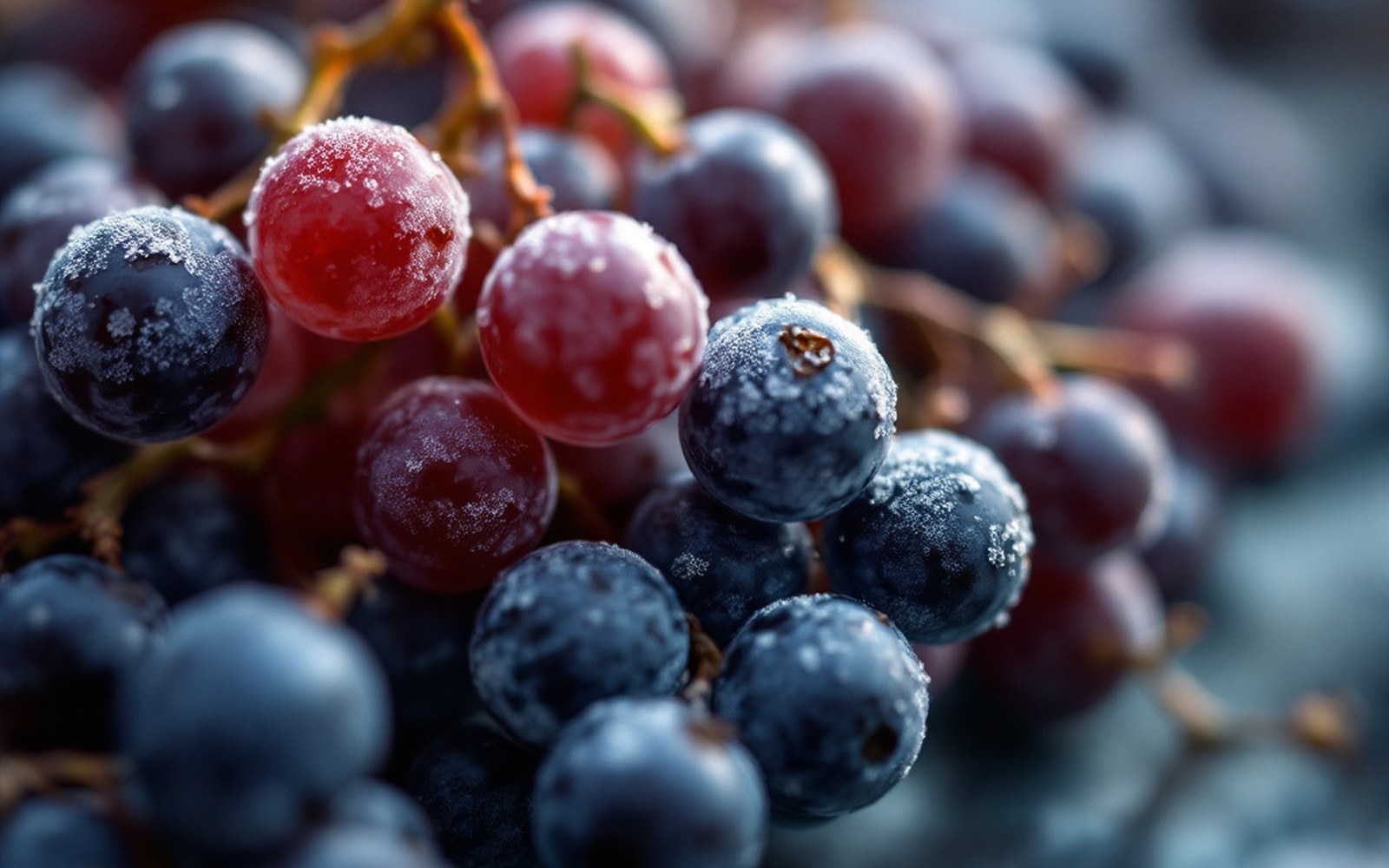
Skins with the bloom still on them. Cabernet Franc colours and softens before the season closes.
Acid, aromatic intensity, and what cool temperatures actually do
At the chemistry level, a cool growing season slows the respiration that burns malic acid out of the berry. Where a hot region ripens Riesling quickly and loses acidity in the process, Niagara's long, measured autumn holds that acid in reserve while primary aromatics — the terpene compounds responsible for the variety's signature floral and citrus registers — accumulate in the skins. The result is a wine with structural tension, the balance of sugar against acid against aromatic intensity that makes fine Riesling recognisable. Researchers at Brock University's Cool Climate Oenology and Viticulture Institute ↗ have studied exactly this accumulation pattern in Niagara Riesling, and the region's combination of heat summation and diurnal temperature swing maps closely onto what other serious Riesling regions — the Mosel, the Nahe, Austria's Wachau — have long held as ideal.
The escarpment's benches intensify the effect. The Beamsville Bench and Twenty Mile Bench sit as terraces on the face of the escarpment, at elevations that put them above the cold air pooling on the lake plain while still capturing reflected warmth from the rock and the slope. Soils on the benches are well-drained, often stony clay-loams over limestone-derived till, which keeps vine roots stressed enough to concentrate flavour without the stress of drought. Riesling on these sites ripens with a mineral edge — a quality consistently associated with thin soils over calcium-rich substrate in every cool Riesling region — and the acid retention is notably higher than on the warmer, heavier soils of the lake plain below.
The appellation framework and what it confirms
The Vintners Quality Alliance appellation system, which gained statutory force under the Vintners Quality Alliance Act of 1999 ↗, formalised what growers had known empirically: certain sub-regions produce Riesling with a recognisably distinct character. Designated Viticultural Areas within the Niagara Peninsula — including the Beamsville Bench and Twenty Mile Bench as named sub-appellations — allow producers to make geographic claims on labels that carry legal weight, and those claims are verified through sensory and analytical panel review. For Riesling, sub-appellation matters more than for most varieties, because the vine's sensitivity to site is unusually high. A Riesling from the bench carries different acid architecture and aromatics than one grown on the lake plain, and the appellation framework gives consumers a way to read that difference before opening a bottle.
The same framework governs icewine, and here Riesling occupies a second important position. Riesling's late ripening and its capacity to hang on the vine through early winter frosts without rotting makes it well-suited to natural freezing. VQA icewine rules require harvest and pressing at or below −8°C, with no mechanical concentration permitted — only what freezing naturally achieves. Riesling icewine is structurally different from the Vidal icewine that dominates production: less thick, more acidic, more age-worthy, with aromatic complexity that develops over years. The acid that can seem a liability in cool, underripe years becomes its asset when the wine is built to last.
The Niagara Peninsula provides exactly this, and the mechanism is double.
Winter risk and the calculation growers make
Riesling is not immune to winter kill. It is a vinifera variety, and vinifera canes and buds die when temperatures drop to the ranges Ontario can reach in a severe winter — roughly −20°C and below sustained for hours or days. The lake's moderating effect reduces that risk on the north shore, and the escarpment's bench sites are further protected by their elevation above the coldest air drainage. But the risk never reaches zero, and growers on exposed sites make active choices about training systems and vine spacing that acknowledge it. Cane pruning, which leaves longer flexible wood rather than fixed spurs, allows some recovery from partial bud death; growers can use a retained cane as a hedge against bud loss. The calculation is not different in kind from what Riesling producers face in the Mosel after a harsh continental winter — but it is more present, more statistically likely, and it shapes how seriously producers on marginal sites think about variety selection.
What Niagara has done with Riesling is demonstrate that cold-climate viticulture is not a limitation to be apologised for but a set of conditions to be matched to the right variety. Riesling is the right variety. Its demands — long season, cool nights, acid-retaining temperatures, a slow finish — are the description of what the escarpment and the lake jointly produce. The region was not chosen for Riesling; Riesling was chosen for the region, and the fit, measured in the glass, holds.