A lake and a cliff make a climate that should not be there
Two physical features conspire to push a viable growing season into a latitude that should not have one.
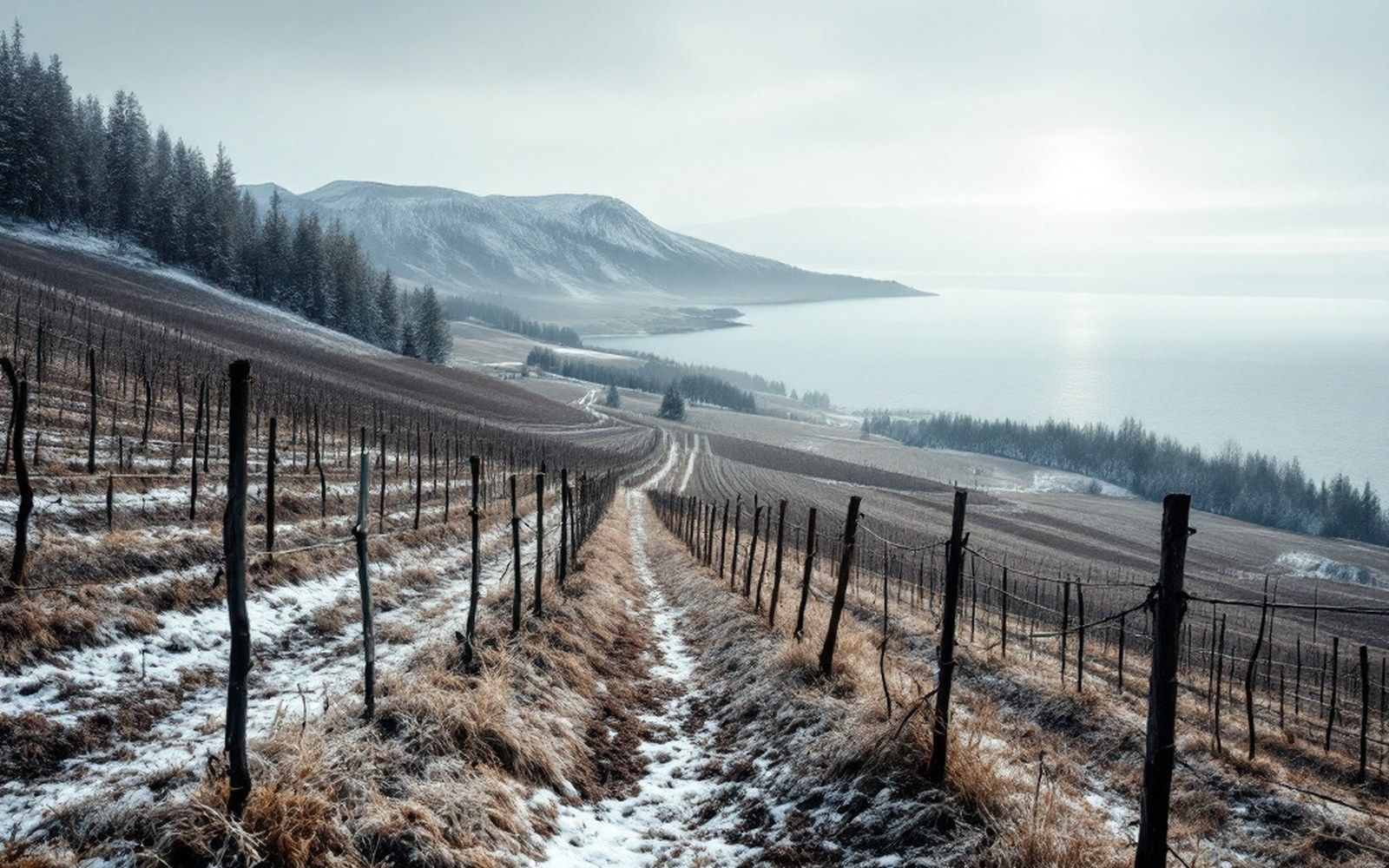
The vineyard strip: escarpment behind, lake in front, three to seven kilometres of ground in between.
The latitude problem
The Niagara Peninsula sits at roughly 43° North — the same latitude as Tuscany on paper, but the comparison collapses quickly under a continental climate. Tuscany does not endure months of frozen soil and wind off the Canadian Shield. Ontario does. Without some mediating force, the Peninsula's winters would kill most Vinifera vines outright and its growing season would close before Riesling or Cabernet Franc could accumulate enough warmth to ripen. The continental baseline is simply too harsh.
What saves it are two features that happen, by a geographic accident, to work in tandem: Lake Ontario ↗, pressed close to the northern edge of the Peninsula, and the Niagara Escarpment, rising like a backstop several kilometres to the south. Neither one alone would do the job. Together they create a thermal pocket that is, by measurable margins, a different climate from the farmland ten kilometres away in either direction.
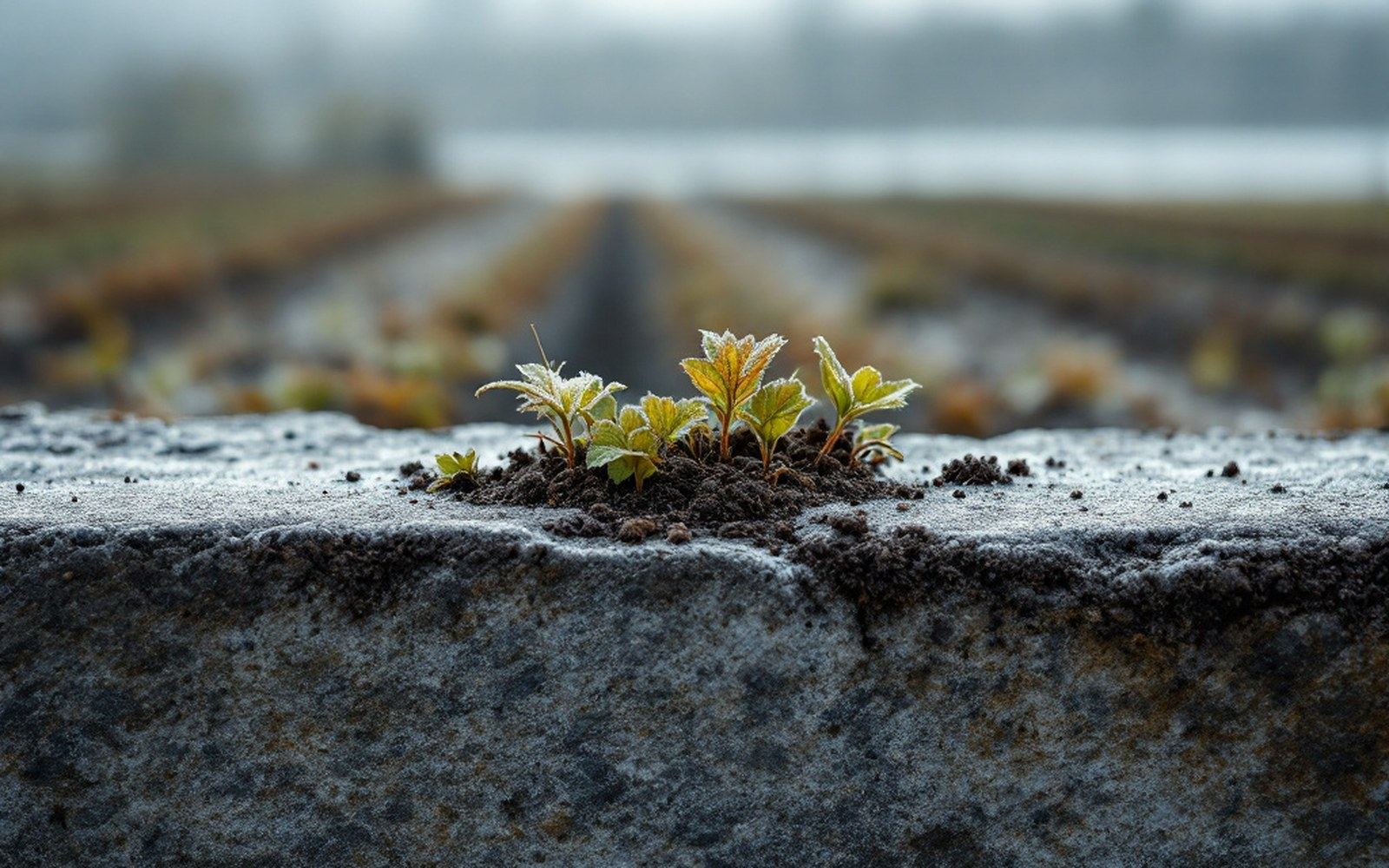
Thin soil over dolomite. Drainage is why a bench is named separately from the plain below it.
What the lake does
Lake Ontario is the smallest of the Great Lakes by surface area but the deepest in proportion to that area, and because of that depth it stores heat efficiently. Through summer it absorbs energy from the sun; by autumn, when the vineyards need warmth to hold on through the final weeks of ripening, the lake is releasing it. Surface water temperatures in October remain well above the air temperature on the shore, and the prevailing westerly and south-westerly winds carry that warmth onshore across the vineyards. The practical effect is that frost arrives later on the lakeshore than inland ↗, sometimes by several weeks — and those weeks are what finish a late-ripening variety.
Spring works in reverse. The same thermal mass that stores summer heat into autumn is also slow to warm in spring, which keeps air temperatures modest along the shore while inland sites are already getting warm. This delays bud break on lakeshore vines. Delayed bud break sounds like a disadvantage until you understand what it protects: vines that push their buds in early April are vulnerable to a late frost that comes in May, which is not unusual in Ontario. Keeping bud break later moves it past the most dangerous window. The lake, in effect, stretches the season from both ends simultaneously.
The other thing the lake does is humidity and cloud cover, which moderate both the highs and the lows. Clear, dry inland nights lose heat fast and produce the radiation frosts most likely to damage young growth. The moister air mass over the lakeshore holds a floor under overnight temperatures. This is what growers and researchers call the lake effect — a buffering mechanism that suppresses extremes rather than simply raising averages.
What the escarpment does
If the lake is the heater, the Niagara Escarpment ↗ is the lid. The escarpment is a Silurian-era dolomite ridge that runs across southern Ontario roughly parallel to the lakeshore, rising abruptly to between 50 and 100 metres above the plain. The plain between the escarpment and the lake — three to seven kilometres wide in most of the wine country — is where virtually all of the Peninsula's vineyard land sits.
- A place with a piece on this site
- Ontario
- The lakes that make the climate
Five places on one lake system: the bench, the lakeshore, the university town, the County on limestone, and an island in Lake Erie.
Cold air is dense and behaves like a fluid: it drains downslope to the lowest available point. On a clear night, cold air rolling off the escarpment meets the warmer air coming off the lake and the two air masses produce a gentle circulation that keeps temperatures across the bench more stable than they would otherwise be. The escarpment also acts as a physical barrier to cold northerly air, intercepting it before it reaches the vineyard plain below. What descends is not the raw continental air from the north but something that has been deflected, slowed and partially mixed.
The south-facing slopes on the escarpment's face are additionally valuable because they receive direct solar radiation at a more perpendicular angle than a flat field at the same latitude, increasing the effective heat load on both soil and canopy. This is the logic behind the named benches — Beamsville Bench and Twenty Mile Bench are not marketing categories but topographic positions on that cliff where aspect, elevation and drainage each matter to how the vines perform.
Together they create a thermal pocket that is, by measurable margins, a different climate from the farmland ten kilometres away in either direction.
The growing season in numbers
Growing degree days, the standard metric for accumulated heat, register somewhere in the range of 1,300 to 1,450 Celsius degree days in a typical year in the warmest parts of the Niagara lakeshore, depending on the year and the exact site. That is close to the lower limit for reliable Vinifera ripening, and it does not leave much margin. At Brock University's Cool Climate Oenology and Viticulture Institute, researchers have documented how small-scale topographic variation — a metre of elevation, a shift in slope aspect — can produce measurable differences in that heat accumulation within a single appellation. The region earns its warmth by millimetres.
The Vintners Quality Alliance appellation structure acknowledges this in the way it has drawn its sub-appellations. The distinction between a broad Niagara Peninsula designation and a tighter one like Beamsville Bench or Four Mile Creek is partly a statement about these physical variables — the way slope, elevation and proximity to the lake interact to produce different thermal regimes across a relatively compact area.
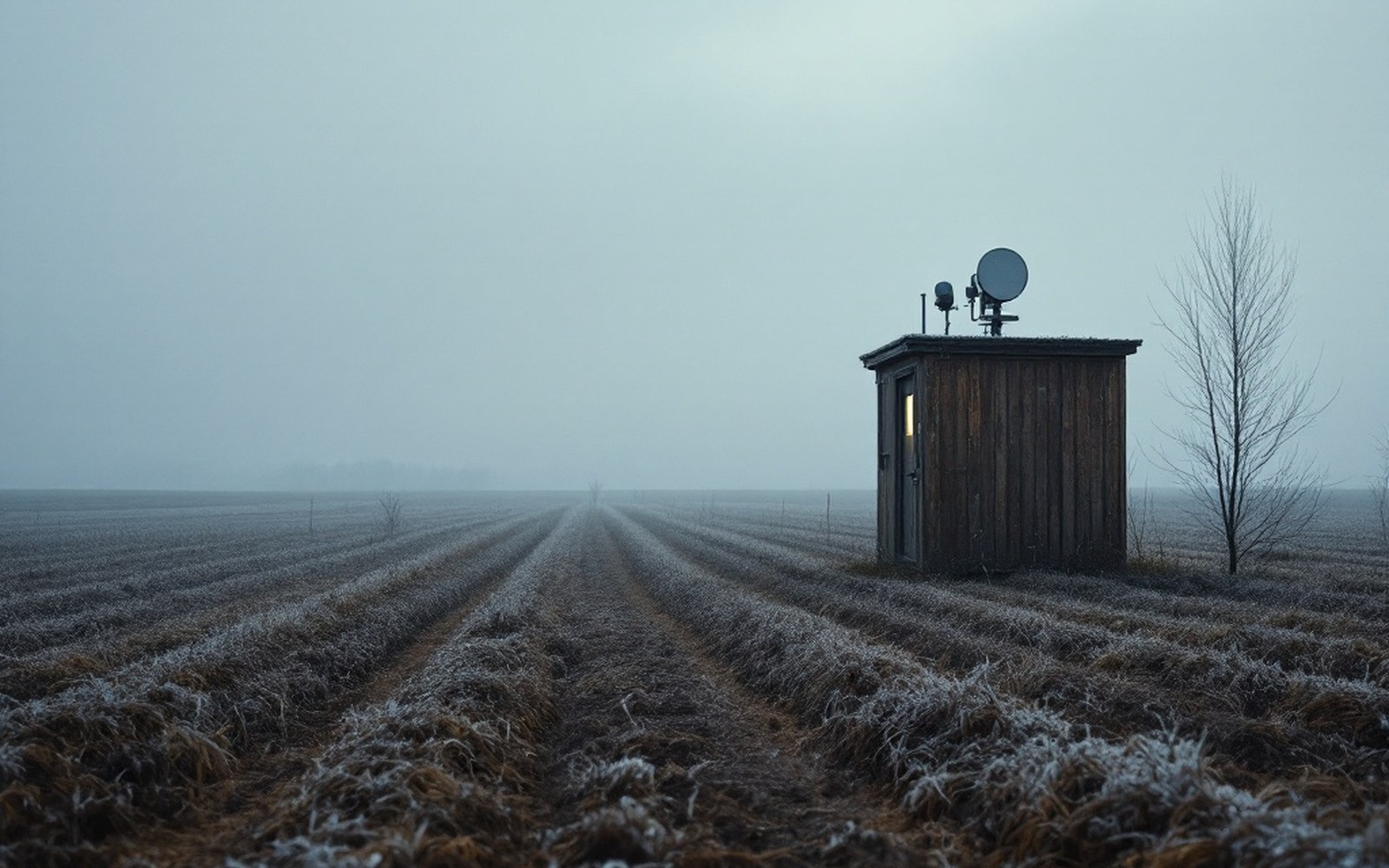
An instrument shelter in the rows. Warmth is a budget here, and this is where it gets counted.
The fragility underneath
It is worth being clear about what this system is not. It is not a warm climate. It is a marginal one held above the line by specific physical geography, and it remains vulnerable. Winter kill — the cold-induced death of Vinifera canes, buds or entire vines — is a real and recurring event, not a historical footnote. An unusual cold snap, a sudden polar incursion, or a vineyard positioned slightly beyond the lake's protective range can lose a growing season or more of productive wood. The thermal advantage the lake confers has a hard edge: move far enough from the shore, or climb far enough above the lake-effect envelope, and the advantage disappears.
This is why appellation boundaries in Niagara follow physical logic more closely than in many warmer regions. The difference between viable and unviable is not a matter of degrees of quality but sometimes of degrees Celsius on a February night. The lake's documented moderating influence on the surrounding region is substantial, but it has limits, and experienced growers know exactly where those limits are in their own blocks.
What the lake and the escarpment together produce, then, is not a generous climate but a sufficient one — enough warmth, enough protection, enough delay of frost to make a wine region possible where the raw latitude says it should not be.