A second region on limestone, colder still
The County has the right geology and the wrong winters — and growers have decided that is good enough.
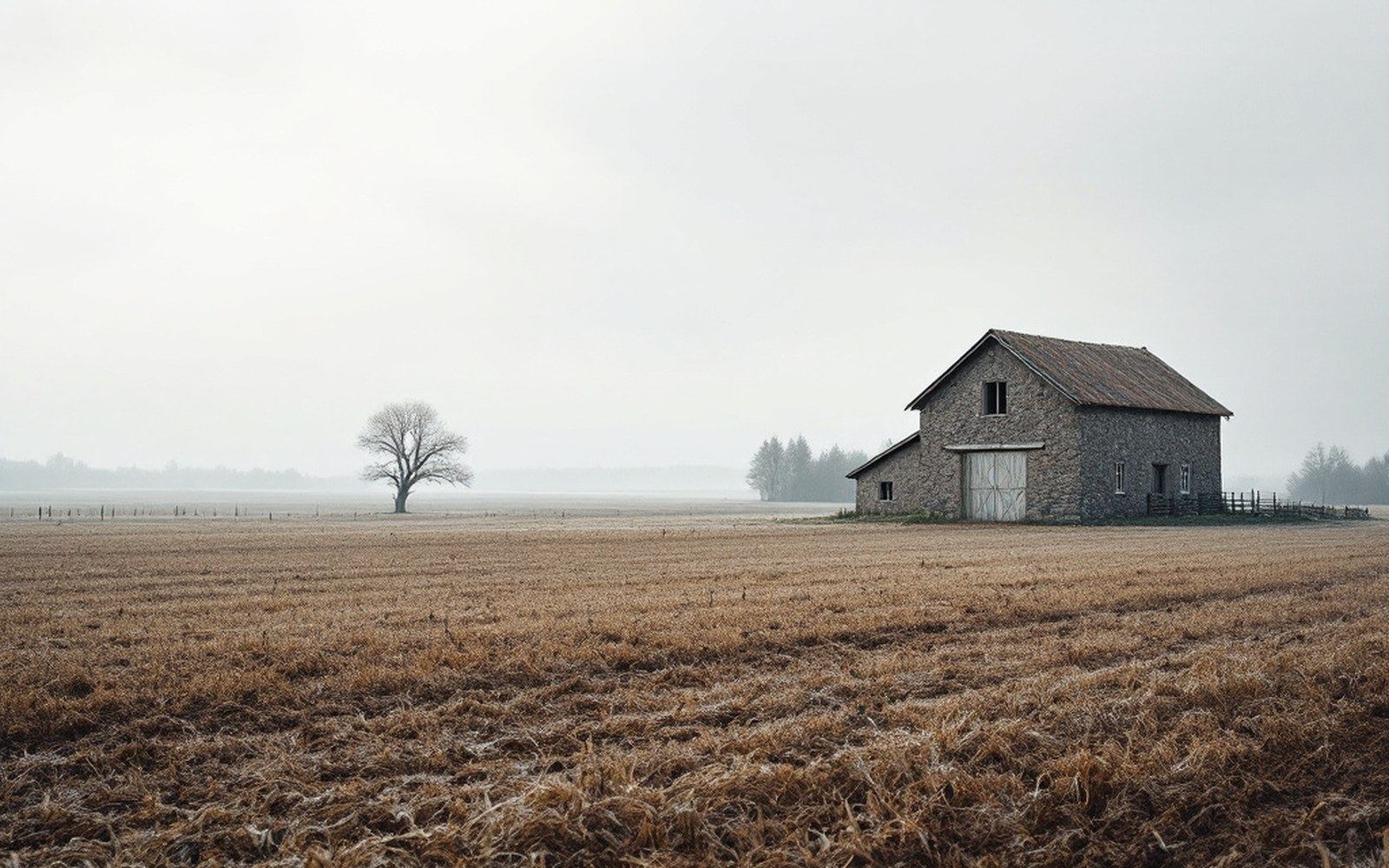
Shallow soil over limestone, with no lake close enough to help. County vines are buried every autumn.
Limestone under everything
Prince Edward County occupies a peninsula that juts into Lake Ontario east of Toronto, separated from the mainland by the Bay of Quinte. It sits on the Trenton limestone formation, a flat-bedded Ordovician rock that pushes close enough to the surface that topsoil is often measured in centimetres rather than metres. Vines on shallow soil over limestone drain fast, stress early, and produce fruit with a mineral tension that shows in the glass — the same logic that governs the great Chablis terroir, where Kimmeridgian limestone and marl keep roots honest. In the County, the rock is older and the climate is harsher, but the structural argument is the same: geology that withholds forces the vine to work.
The lake moderates temperature here, but less reliably than in Niagara. The County lies at the eastern end of Lake Ontario, where the warming fetch is shorter and prevailing winds carry cold air in from the interior rather than the temperate mass of water that shields the Niagara Peninsula. Winter in the County is genuinely severe. The question growers answered by planting here is not whether cold is a risk but whether the growing season is long and warm enough to justify accepting it.
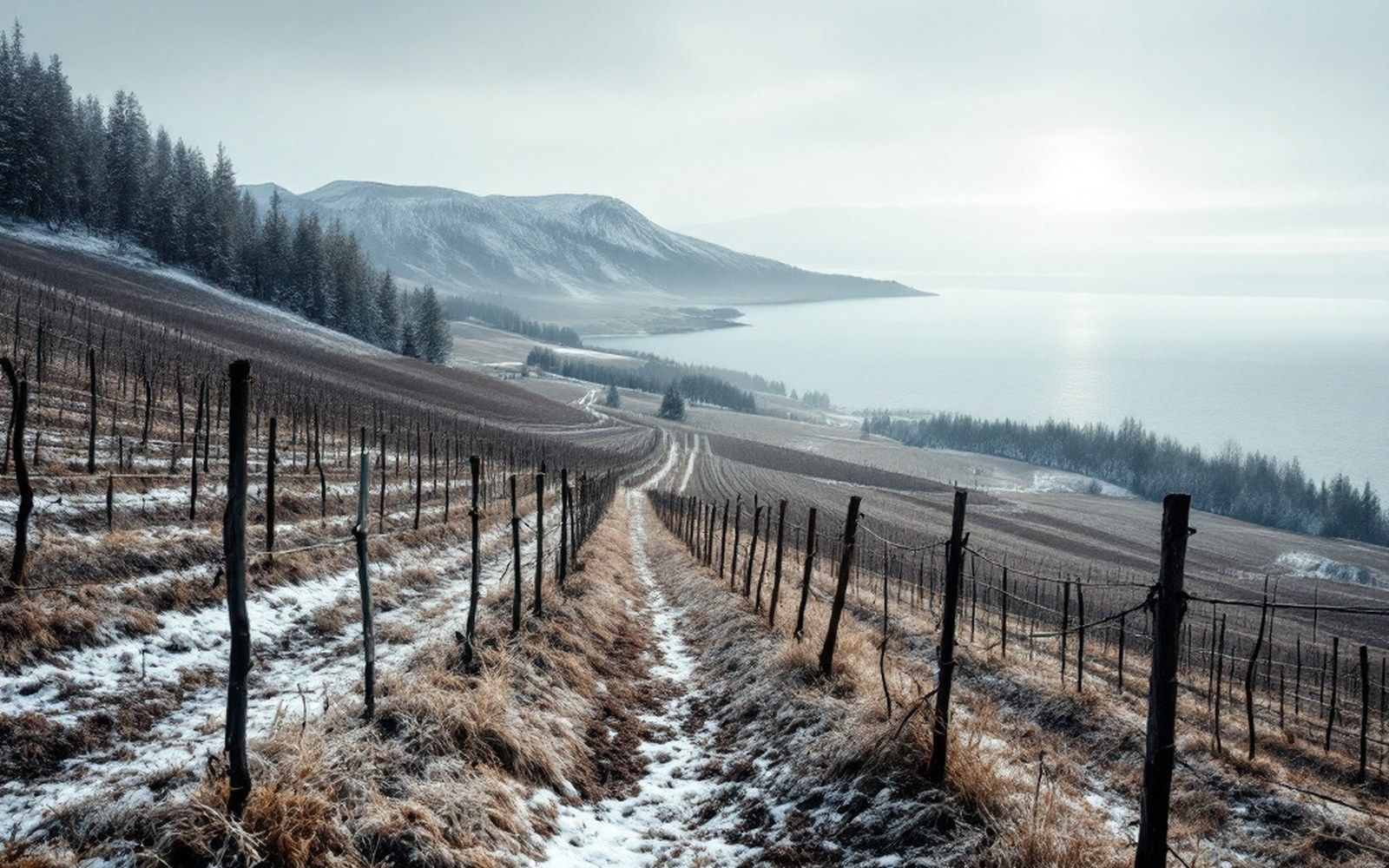
The vineyard strip: escarpment behind, lake in front, three to seven kilometres of ground in between.
What cold means in practice
The answer turned out to be: barely, and only with effort. The County earns its growing degree days later in the season than Niagara, and accumulates fewer of them. Pinot Noir and Chardonnay — the two varieties that have become the region's signature — ripen in a window that closes quickly. A warm September buys the margin; a cool one does not.
More pressing is what happens after harvest. Temperatures in the County regularly fall to levels that kill unprotected vinifera — vitis vinifera, the European wine-grape species — at the graft union, the point just above ground where the cultivated variety is joined to its rootstock. At that junction, tissue is particularly vulnerable, and a night below roughly −20°C can destroy a vine that took years to establish. The response in the County is not site selection alone but physical intervention, season after season: the graft union is buried under a ridge of soil each autumn, then carefully uncovered each spring, in a labour cycle that has no parallel in Niagara's less exposed sites. At some properties, virtually the entire vineyard is hilled up as a matter of routine rather than precaution.
The effort clarifies what the region is actually doing. Growing Pinot Noir on Ordovician limestone with continental winters is a choice to accept difficulty on both ends — from the rock, which stresses; from the cold, which kills — in exchange for the character that those pressures can produce.
A young appellation with a clear identity
Prince Edward County was recognised as a VQA appellation in 2007, relatively recently in the province's wine history. The designation codified what growers had been demonstrating through the early 2000s: that this peninsula could produce wines that tasted of somewhere. The appellation covers the whole county, a single defined area without named sub-appellations of the bench type found in Niagara. The limestone terroir is consistent enough that the boundary argument was simpler — the geology makes the place, and the place is the county.
The lake moderates temperature here, but less reliably than in Niagara.
Brock University's Cool Climate Oenology and Viticulture Institute ↗ has engaged with Prince Edward County's conditions as part of its mandate to understand cold-climate viticulture across Ontario. The challenge of managing vinifera through County winters has focused research on cold hardiness, hilling-up efficiency, and the cumulative cost of annual burial cycles on vine longevity. Those are practical questions with direct economic stakes: a vine that requires manual protection twice a year and still fails after a hard winter is a different calculation than the same variety on a more sheltered Niagara bench.
What the County offers in return is a growing profile unlike anywhere else in the province — a flavour of place grounded in thin soil, flat limestone, and the kind of cold that insists on being taken seriously. That combination has attracted growers willing to work for it, and the wines that come from that effort carry the constraint in them.