The named benches are ledges on that cliff
Elevated terraces on the Niagara Escarpment carry distinct soils and drainage — which is why they carry distinct names.
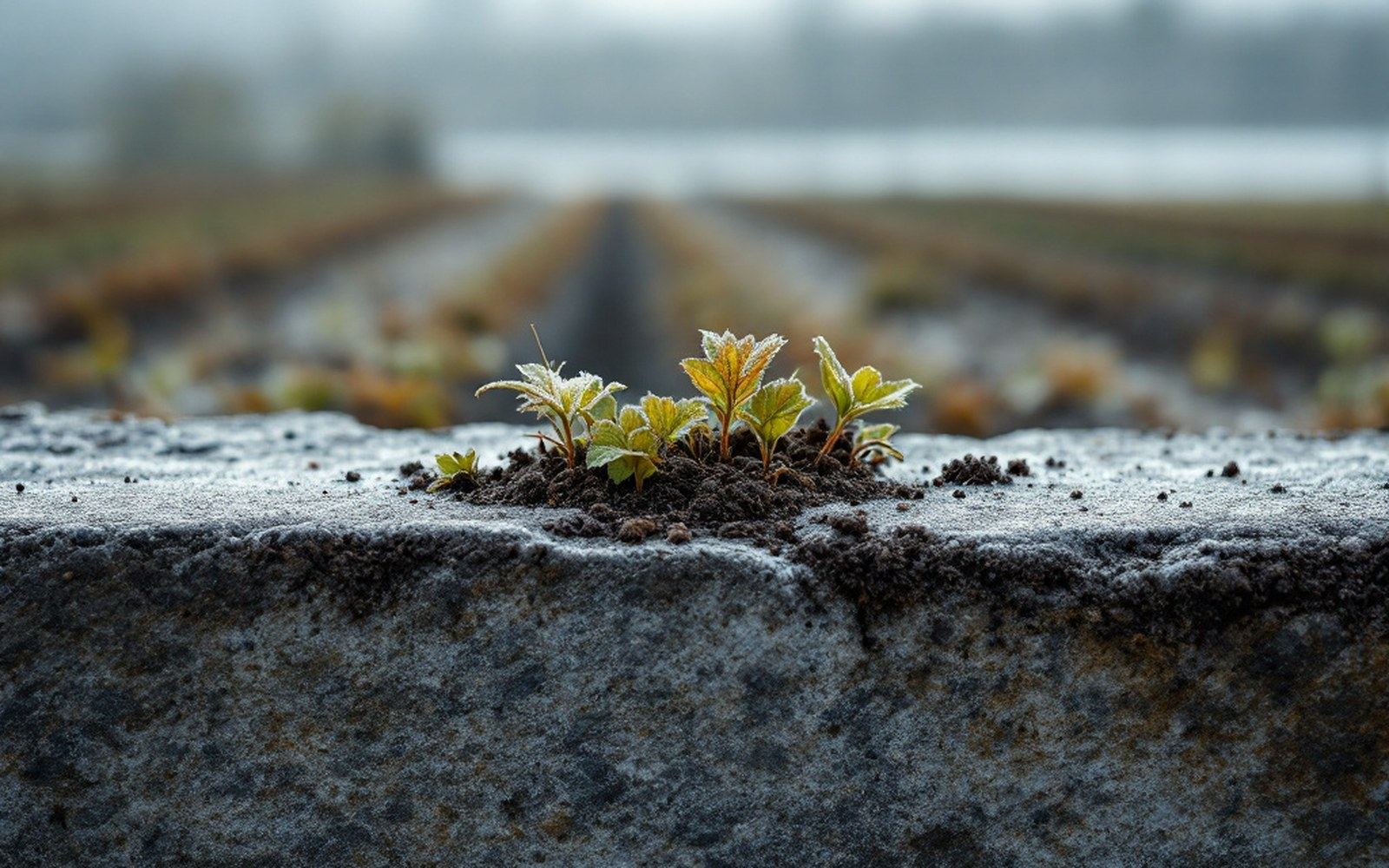
Thin soil over dolomite. Drainage is why a bench is named separately from the plain below it.
What a bench is and why it matters
The Niagara Escarpment runs roughly east to west along the southern flank of the Ontario Peninsula, a limestone-capped ridge that drops sharply toward Lake Ontario. On its face and at its foot, geology has left a series of horizontal terraces — gradual stepbacks in the slope where ancient lake sediments settled and held. These are the benches, and in Ontario wine geography the word carries a precise meaning: an elevated, gently inclined platform on the escarpment face, above the flat lake plain below and sheltered by the cliff rising behind.
That combination — elevation, slope, and the dolomite-and-shale wall at the vine's back — does several things at once. It angles the ground toward the sun, improving heat accumulation across a growing season where every degree day is finite. It ensures that cold air, which is dense and flows downhill like slow water, drains away from the root zone rather than pooling. And the cliff face itself absorbs solar radiation through the day and releases it through the night, moderating temperature around the vines in the same way the lake moderates temperature across the wider peninsula. Terroir — the French shorthand for the sum of soil, microclimate, and topography — is visible here as literal geography.
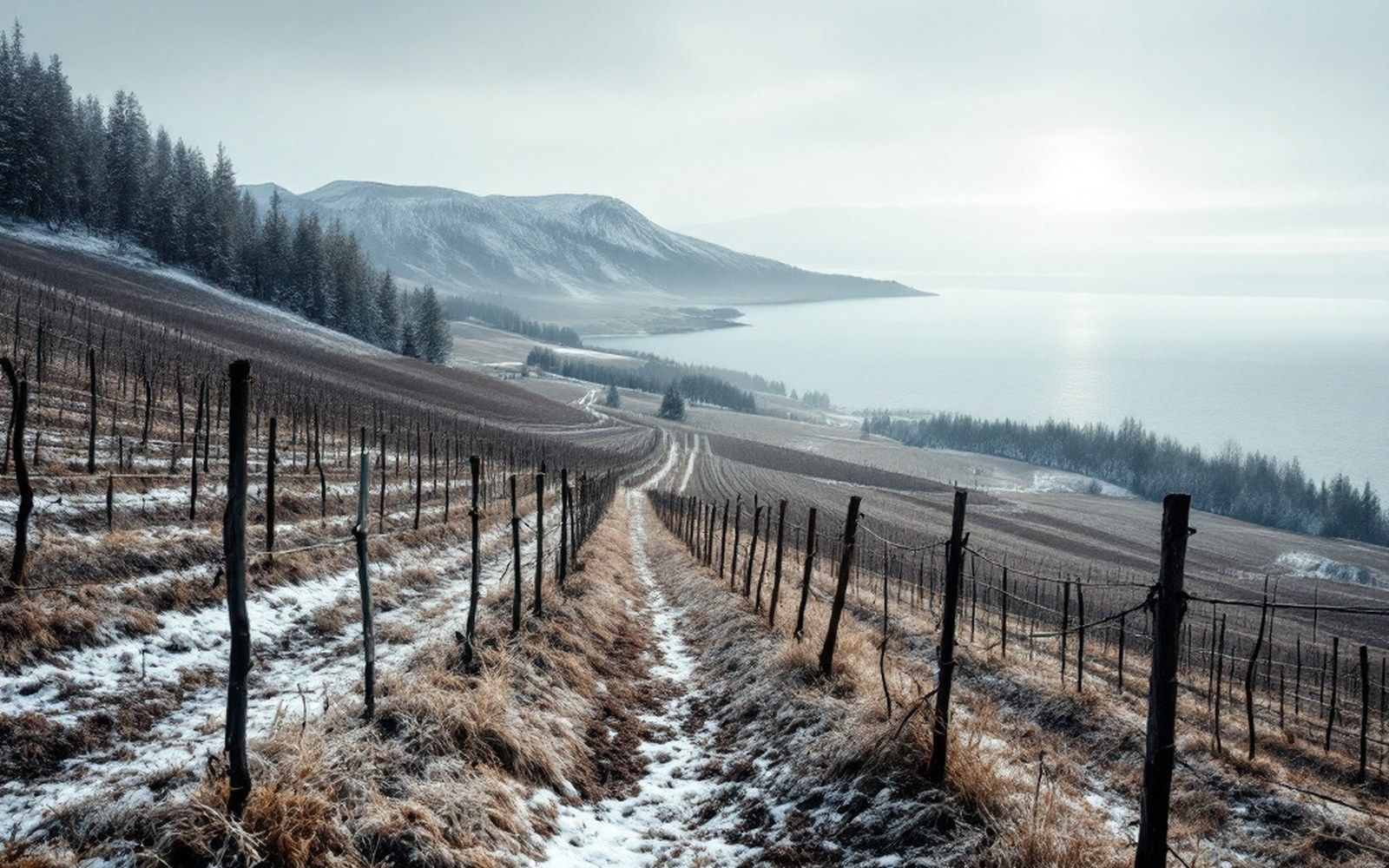
The vineyard strip: escarpment behind, lake in front, three to seven kilometres of ground in between.
Beamsville Bench and Twenty Mile Bench, separately
Two benches carry their own Vintners Quality Alliance sub-appellation designation within Niagara Escarpment: Beamsville Bench and Twenty Mile Bench. The distinction is not cartographic pedantry. Each terrace sits at a different point along the escarpment, carries a different soil profile, and drains differently — and those differences register in what grows well there.
Beamsville Bench, centred on the town of Beamsville, occupies a narrower platform at a relatively consistent elevation. Its soils are primarily clay loams derived from glacial till, with moderate water retention. That retention is a liability on the flat lakeshore plain, where poor drainage compresses roots and dilutes fruit in a wet year; on the bench, the slope sheds excess water while the clay fraction holds enough moisture to carry vines through a dry summer. The combination supports varieties that appreciate steady but not excessive moisture — Riesling, Chardonnay, and Pinot Noir have long track records here, and the site's slightly higher elevation means slightly cooler nights, which preserves the aromatic lift and acidity that cold-climate viticulture depends on.
Twenty Mile Bench takes its name from Twenty Mile Creek, which cuts through the escarpment nearby. It sits somewhat further east and at a slightly different elevation gradient. Soils here shift toward shallower, better-drained loams over fragmented limestone and shale, with less clay content and more stone. Drainage is faster; the vine is pushed to root deeper to find moisture, and that stress — moderate, not destructive — is associated with more concentrated fruit. The Niagara Escarpment's geological composition at this point also means that organic matter in the shallow profile is modest, which limits excessive vigour and keeps canopy manageable without aggressive intervention.
The soils on both benches were laid down by the same sequence of glaciation and glacial lake recession that shaped the whole peninsula, but the details of how material was deposited, sorted, and left behind vary across even short distances. A glaciologist's map and a winegrower's map of the escarpment face, laid on top of each other, would line up closely.
Both sub-appellations require that wines bearing the name be made entirely from grapes grown on the named terrace. The VQA Ontario appellation rules ↗ set that provenance requirement; without it, a bench name on a label would be marketing rather than geography. Here, it is geography — a ledge on a cliff, defined by the soil underfoot and the slope that drains it.
That combination — elevation, slope, and the dolomite-and-shale wall at the vine's back — does several things at once.