An association that predates the appellation
The growers' organisation is older than the rules it now operates within — and what it does is still distinct from what the wineries do.
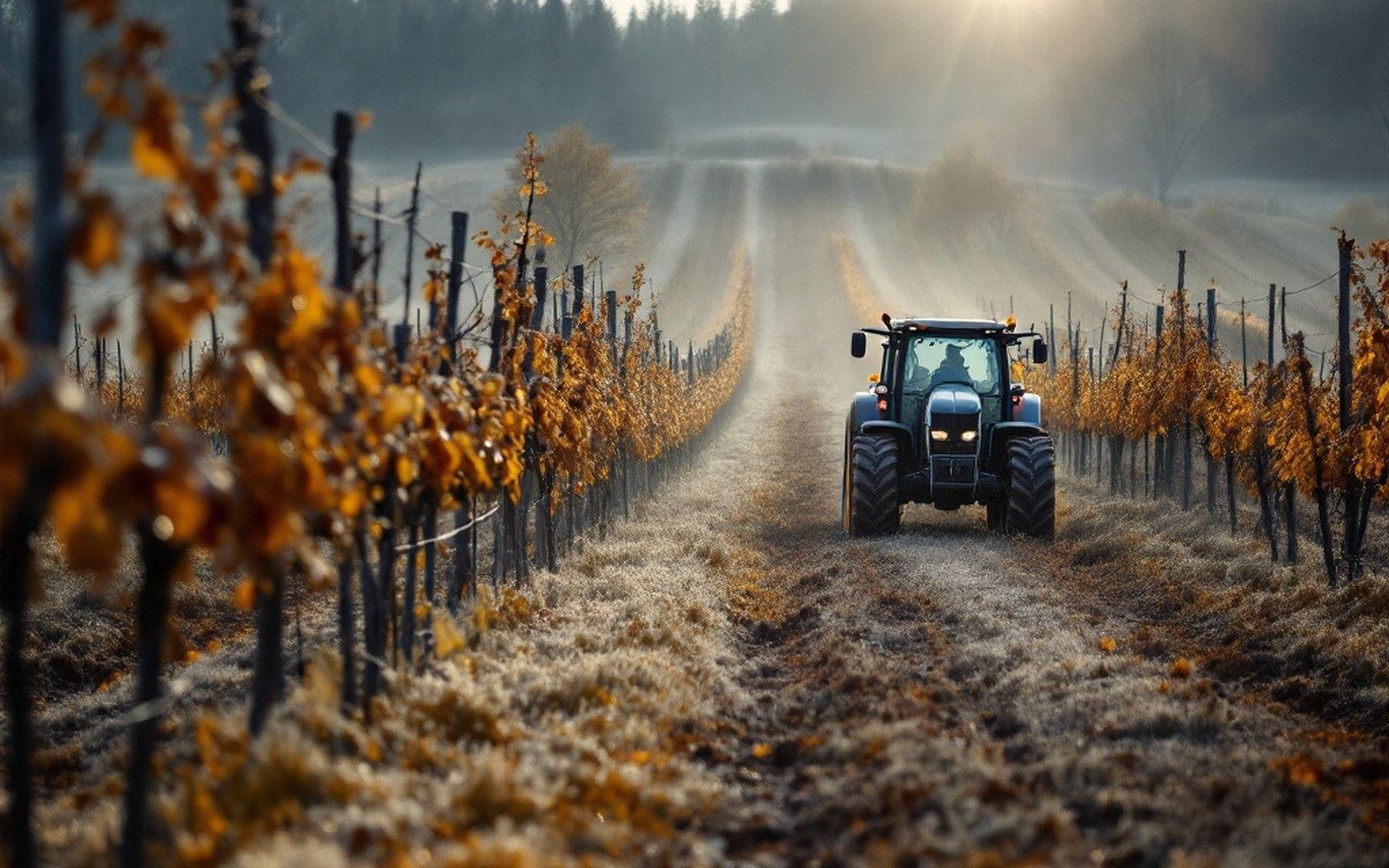
A tractor at the end of the row: the growing half of a relationship that is still negotiated.
Before the standard was written
The Ontario Grape Growers — formally the Grape Growers of Ontario — predate the Vintners Quality Alliance by decades. Growers had organised collectively well before 1988, when VQA emerged as a voluntary appellation system, and long before the provincial government gave that system statutory backing. The association's roots lie not in wine quality standards but in the older, harder business of selling fruit: negotiating price schedules, securing market access, and pressing government when the economics turned against growers who were exposed to processor power and import competition.
That history matters because it explains a structural fact that still shapes the Niagara Peninsula today: the person who grows the grape and the person who makes the wine are often not the same person, and they have not always wanted the same things. Wineries tend to argue for flexible supply, competitive pricing and the latitude to source across appellations. Growers tend to argue for minimum prices, transparent contracts and the right to know what variety a winery will actually want at harvest before they've already planted it. The Grape Growers of Ontario ↗ represent the farming side of that equation, and that is a different constituency from the one wineries represent, however closely the industries are bound together.

Bench glassware at the institute that sits inside the region it studies.
What negotiation actually looks like
The relationship between growers and processors in Ontario has historically been governed by a pricing and marketing framework under the Farm Products Marketing Act, a piece of provincial legislation that gives producer organisations real authority rather than merely advisory standing. Under this arrangement, grape prices are not simply set by the market in any given year — they are negotiated through a system that accounts for variety, growing region and contracted volume, with the Grape Growers of Ontario at the table as a recognised bargaining entity. This is a statutory marketing framework ↗ that Ontario agriculture has used across multiple sectors, and its application to grapes reflects the political reality that growers without it would be individually negotiating against buyers with far more leverage.
The practical consequence of this structure is that growing decisions — what to plant, where, at what density — are shaped not just by what the escarpment and the lake make possible, but by what contractual signals are coming from the winery side. A grower on the Beamsville Bench weighing whether to pull out hybrid vines and replant Chardonnay is making an agricultural bet, a capital commitment that takes years to return, against a demand signal that a winery can revise. The association exists partly to make that negotiation less one-sided.
The overlap with appellation rules
When VQA was codified and eventually written into regulation, growers did not step back from the picture — they became more entangled with it. The appellation system established under the Vintners Quality Alliance Act of 1999 ↗ defined where wine could come from to carry a regional designation, which directly affected the value of fruit grown within those boundaries. Niagara Peninsula grapes became, in regulatory terms, worth distinguishing from grapes grown elsewhere in Ontario. Beamsville Bench and Twenty Mile Bench as designated sub-appellations made precise address meaningful on a label. That made vineyard location a commercial asset in a way it had not previously been, and it gave growers within those boundaries a stake in how the appellation was maintained and policed.
Brock University's Cool Climate Oenology and Viticulture Institute, embedded in the region since the 1990s, has functioned as a kind of neutral ground between the two sides — generating research that benefits both the grape-grower trying to understand winter hardiness in a particular block and the winemaker trying to understand how site translates into flavour. The science does not take sides, but it raises the quality of the conversation.
What persists is a productive tension: growers pushing for the conditions that make farming viable, wineries pushing for the conditions that make labelling compelling, and an appellation framework that was built to hold both. The Ontario grape growers did not wait for that framework to organise. They built their capacity before it existed, and they work within it now without having become the same thing as the institutions it created.
Wineries tend to argue for flexible supply, competitive pricing and the latitude to source across appellations.