Drying the fruit to concentrate a short season
A technique from Valpolicella travels north to solve a cold-climate problem
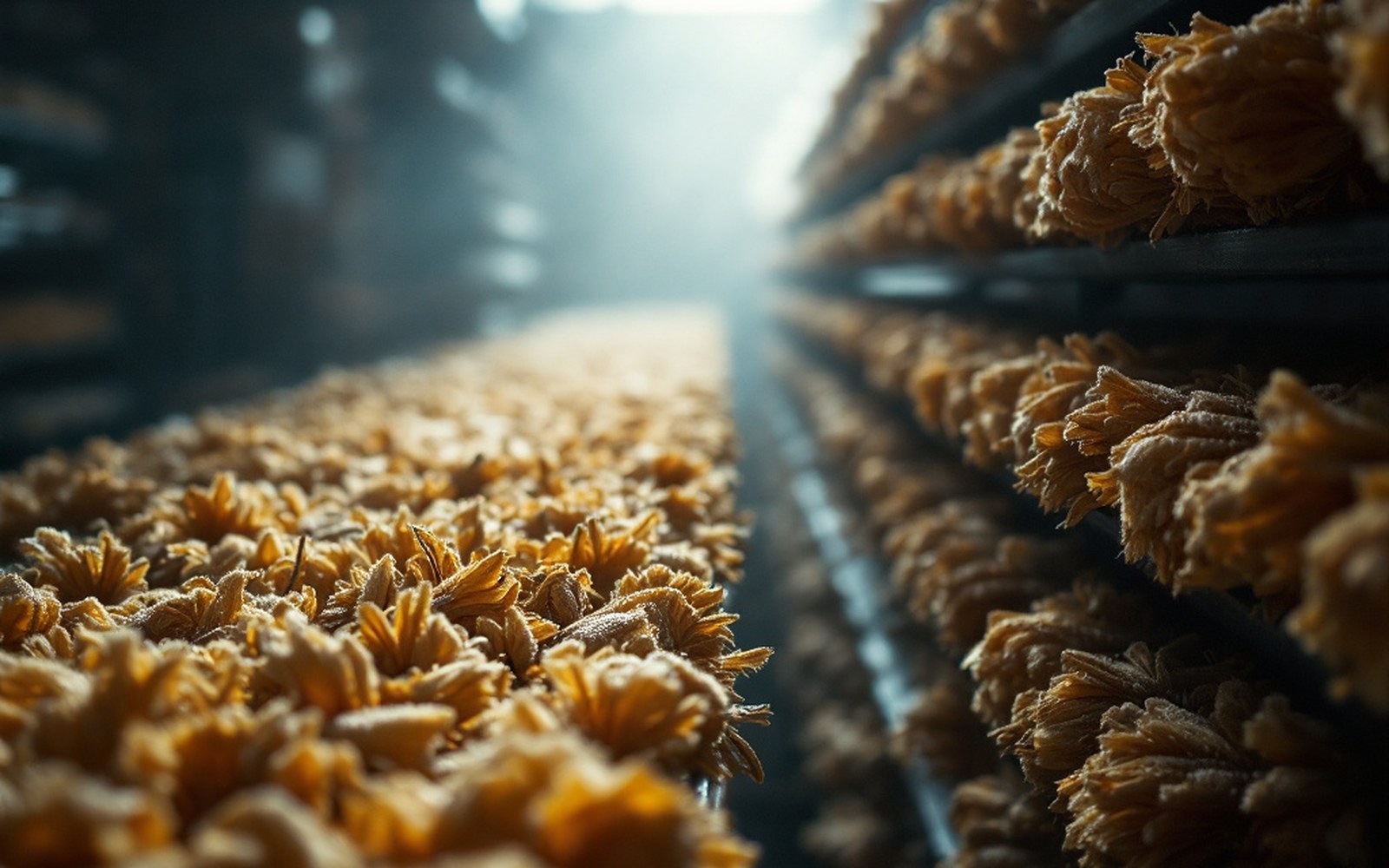
Bunches drying on racks. Water leaves, sugar concentrates, and a short season is made up indoors.
What appassimento is and why Ontario borrowed it
Appassimento — Italian for "withering" — is the practice of drying harvested grape bunches before pressing, allowing water to evaporate from the berries while sugars, acids and phenolic compounds concentrate. The method is most associated with the Valpolicella zone in the Veneto, where it underpins Amarone and Recioto della Valpolicella. Ontario's adoption of it is not a stylistic affectation. It is a workaround for a growing season that sometimes refuses to finish.
The Niagara Peninsula earns its viability from the moderating mass of Lake Ontario and the cold-air barrier of the Niagara Escarpment, but heat accumulation — measured in growing degree days — remains tight by any global standard. In an early-closing autumn, red varieties in particular can be harvested with flavour ripeness incomplete: tannins still green, sugars still short of what fermentation requires for structure. A grower who picks before the first killing frost has fruit in hand but not necessarily finished fruit. Appassimento is what happens next.
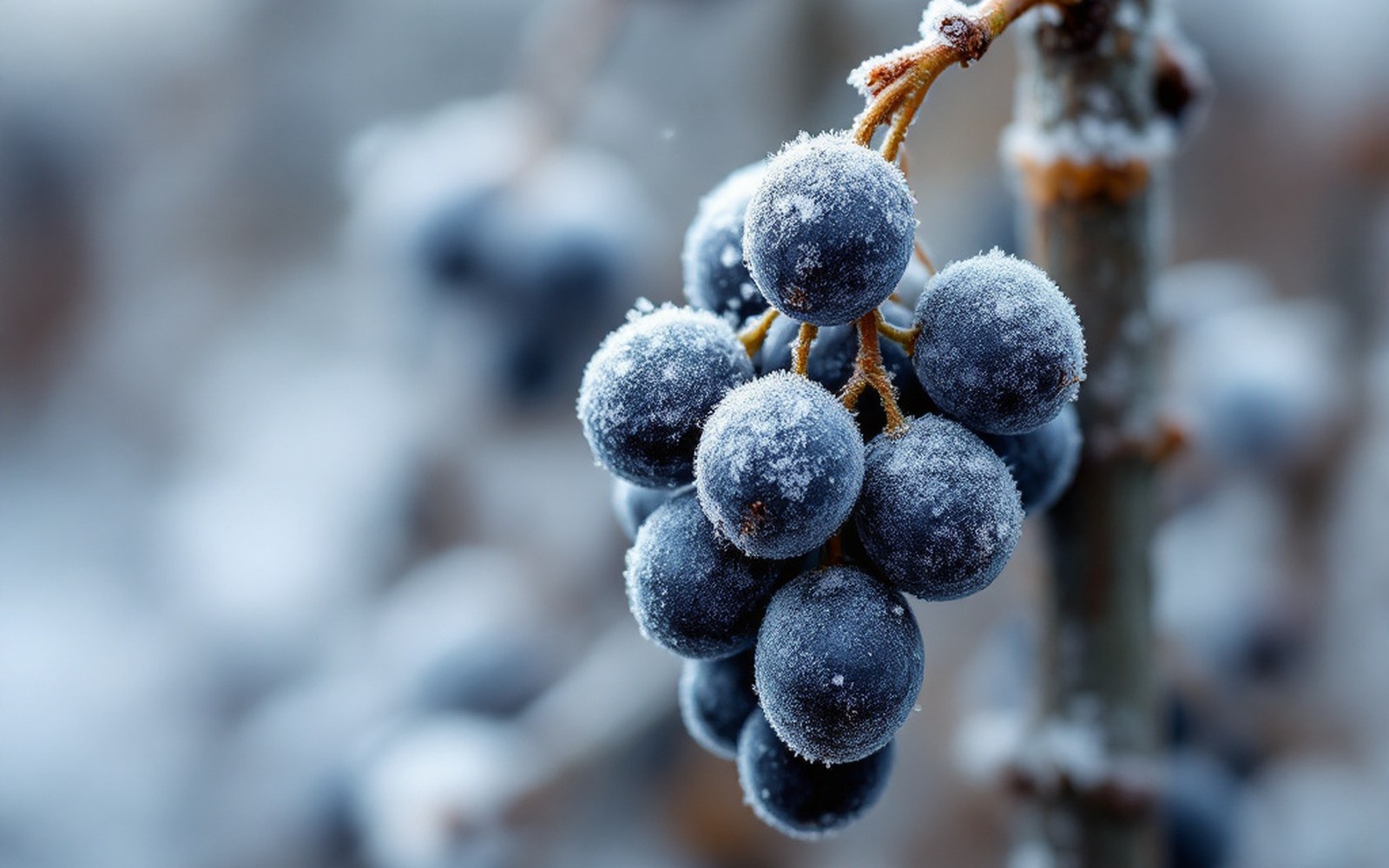
Naturally frozen fruit on the cane. The rule that governs this picture is a temperature, not a date.
What the drying does, and how it is managed here
Picked bunches are spread in shallow trays — or hung on racks — in a dedicated drying room, called a fruttaio in Italian, where temperature, humidity and airflow are controlled. The bunches lose a significant proportion of their fresh weight as water leaves the berry through the skin. A loss of thirty to forty per cent of mass is typical in Valpolicella; Ontario producers working with a shorter drying window often aim for a more modest concentration, knowing the grapes were already stressed by a northern autumn rather than arriving fat with a Mediterranean summer's heat. The process is documented in detail in oenological literature ↗ and requires close management: botrytis — grey rot — is the constant risk when humid Ontario air contacts dense clusters in a warm room.
The varieties most commonly put through this process in Niagara are the Bordeaux reds: Cabernet Franc, Merlot and, where it reaches ripeness at all, Cabernet Sauvignon. Cabernet Franc in particular benefits, because its relatively early harvest — the reason it suits a short season in the first place — can leave phenolic development incomplete in a cool year. Post-harvest drying extends the biochemical clock without extending the growing season itself. Sugars concentrate enough to support a fuller fermentation; the berry skin, desiccating slowly, gives up more extractable colour and tannin.
What it produces and what it cannot fix
The wines that result from Ontario appassimento tend toward higher alcohol and a denser mid-palate than the same variety picked and pressed immediately. Critics of the technique argue that it can mask rather than resolve the underlying problem: a grape that was not ripe when picked is still, metabolically speaking, the grape that was not ripe when picked. Concentration is not the same as ripeness, and tannin extraction from underripe skins produces bitterness rather than structure. Whether the drying is long enough, the airflow consistent enough and the fruit sound enough at pick determines whether the result earns its extra work.
It is also worth noting what appassimento is not: it is not the technique behind Ontario icewine, where the fruit is left on the vine and harvested frozen. That process concentrates by freezing water inside the berry, not by evaporating it from the surface, and the VQA rules governing icewine require natural freezing at or below −8°C in the vineyard. Appassimento happens indoors, after harvest, under human control — a fact that matters to producers trying to use it and to drinkers trying to understand what the label implies.
The Brock University Cool Climate Oenology and Viticulture Institute has examined post-harvest fruit-drying as part of its research into cool-climate winemaking strategies, since the technique represents exactly the kind of adaptation a short season demands. Whether it becomes a formal appellation-level category in Ontario remains an open question; for now it is a production choice, invisible on the label unless the producer chooses to explain it.
A grower who picks before the first killing frost has fruit in hand but not necessarily finished fruit.