Everything ripens at once and the crew is finite
The harvest window in the Niagara Peninsula is short enough to be a hard production limit.
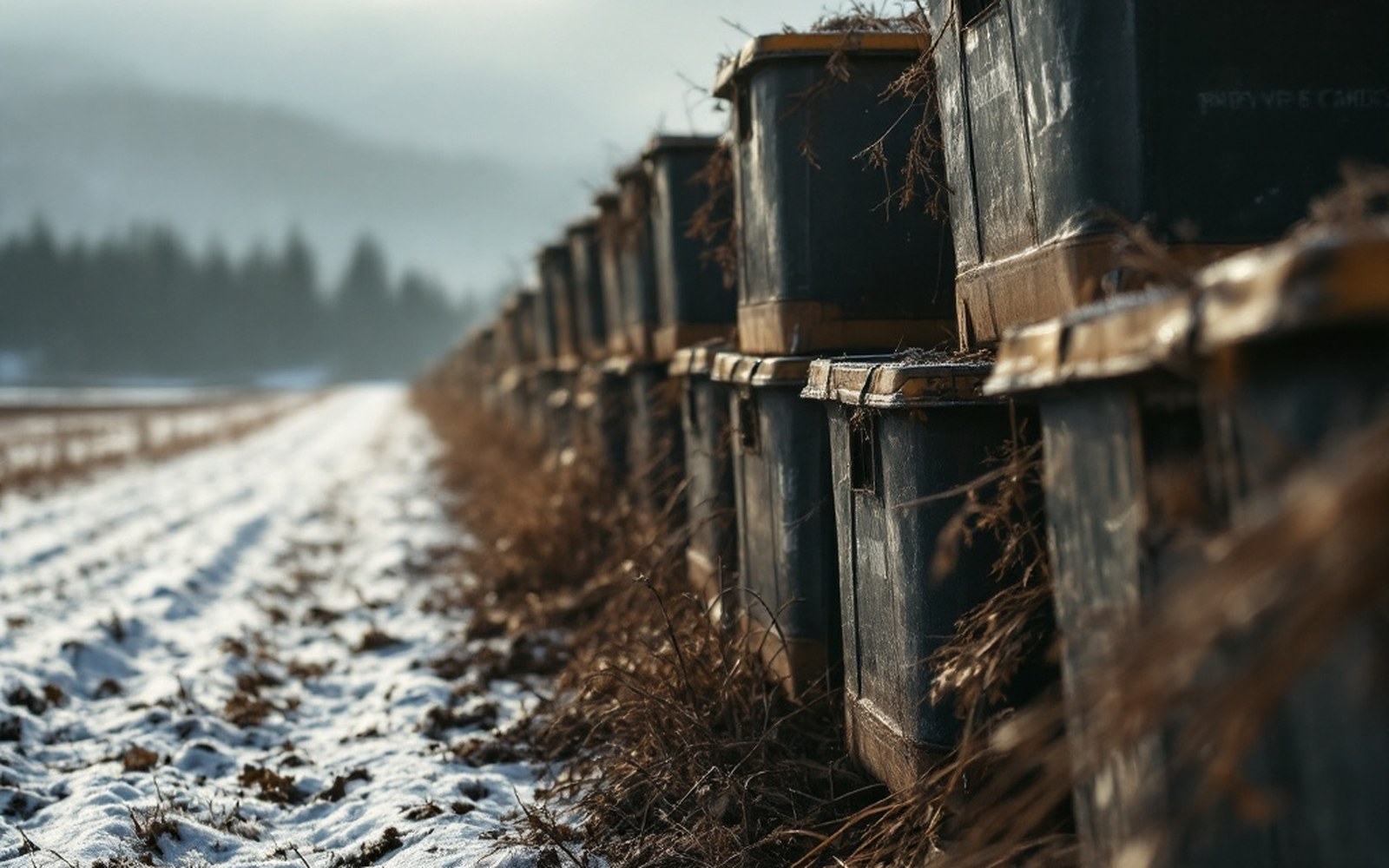
Empty bins at the end of a row. The limit on how much gets made is usually the crew, not the fruit.
The calendar shrinks, then fills
The logic of cool-climate viticulture is built around a long, slow ripening season — fruit that matures late keeps its acid, holds its aromatic compounds, develops character that faster-ripening grapes in warmer regions never accumulate. That slow progress is the gift. The problem is what happens at the end of it. When the Niagara Peninsula's growing season finally delivers ripe fruit, it does so in a rush. Multiple varieties hit their target sugars and phenolic maturity within weeks of each other, sometimes within days, and the producer who cannot mobilise a crew, a press, and a cellar fast enough simply leaves fruit on the vine past its window.
The growing degree day total for the Niagara Peninsula — the accumulated warmth above ten degrees Celsius from April through October — sits in a range that only barely ripens the most demanding vinifera varieties in a good year. That tightness means there is no surplus time at the end of the season. Bordeaux varieties come in last, Riesling and Chardonnay a little earlier, but none of them stagger out conveniently across six weeks the way they might in a warmer continental climate. The first hard frost is a deadline. When it arrives, picking ends for table wine. The only grapes still on the vine after that are the ones intentionally left for icewine, and those require their own separate mobilisation at temperatures far colder than any crew wants to work in.
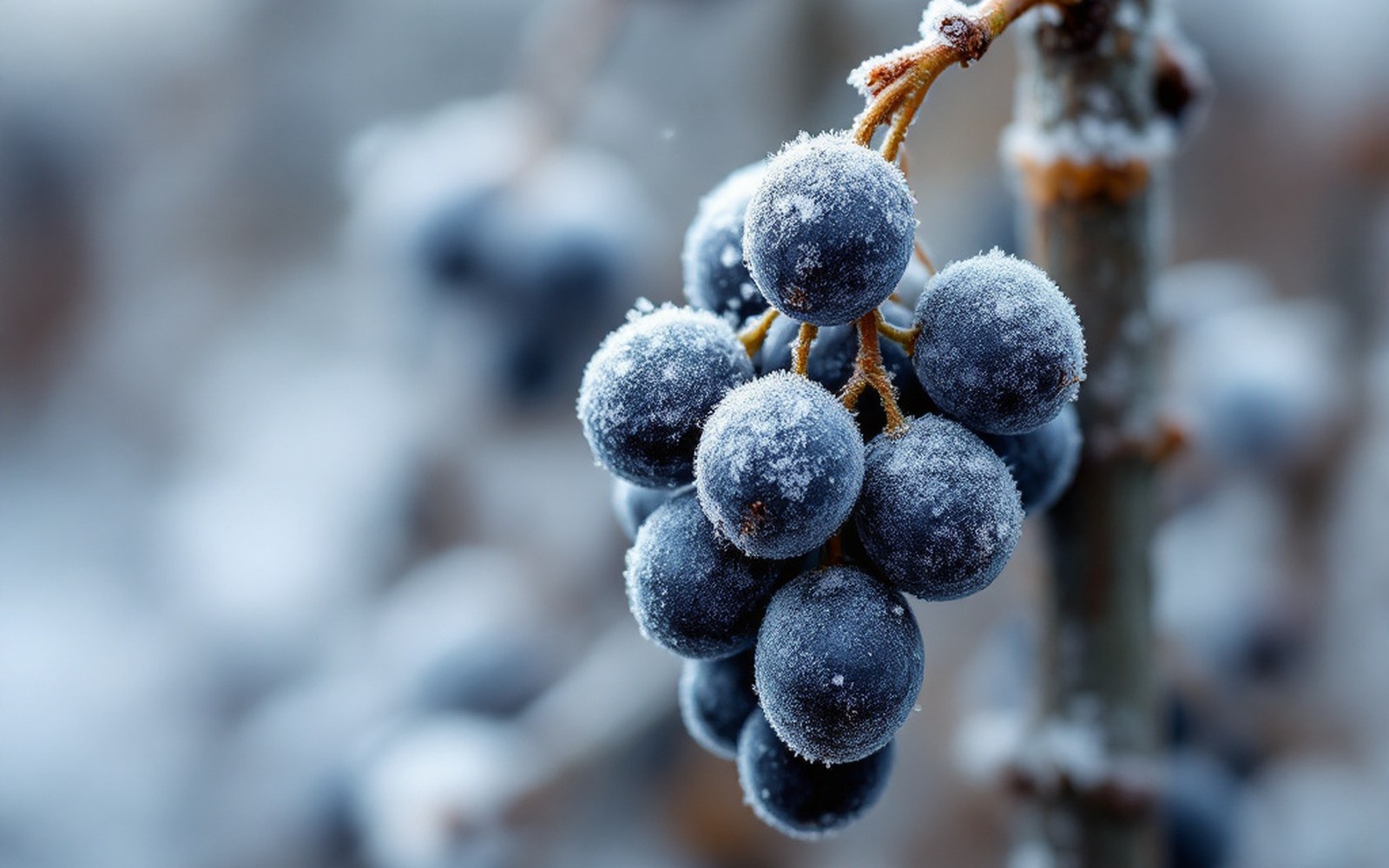
Naturally frozen fruit on the cane. The rule that governs this picture is a temperature, not a date.
What the window decides
The compression of harvest into two to four weeks is not merely a logistical inconvenience. It is a direct cap on volume. A winery with a single press can only process so many tonnes of fruit per day; a barrel hall can only receive so much must; a team can only pick so many rows before exhaustion or darkness calls a stop. Producers on the Beamsville Bench or Twenty Mile Bench manage estate vineyards whose geography is already constrained — the benches are terraces, not broad plains — and the combination of physical site limits and temporal harvest limits means that total output is bounded in two directions at once.
This is one of the reasons Niagara's serious producers tend to stay small by the standards of warm-climate wine regions. A ten-thousand-case winery here is operating at a scale that requires near-perfect logistical coordination every autumn. The LCBO's listing demands, which often require producers to commit to volumes they can guarantee consistently year to year, create a structural tension with this reality: nature delivers a harvest window that varies, the agency requires a supply commitment that does not. Producers who cannot meet volume benchmarks find themselves outside the distribution system that reaches most Ontario consumers, which is one of the quiet constraints shaping what the province's wine industry actually looks like.
Crew, cold, and the icewine extension
Harvest labour in the Niagara Peninsula draws heavily on the federal Seasonal Agricultural Worker Program, which has brought crews from the Caribbean and Mexico to Ontario's orchards and vineyards for decades. The programme exists precisely because local labour markets cannot reliably supply the concentrated short-term demand that fruit agriculture generates. Even with it, the window is tight. Mechanical harvesting handles some blocks, particularly those growing hybrid varieties or fruit destined for bulk production, but the hand-harvesting required for VQA estate wines and for icewine — which must be picked by hand in pre-dawn freezes at −8°C or colder — cannot be mechanised away.
The result is a production culture shaped by constraint as much as by craft. Brock University's Cool Climate Oenology and Viticulture Institute ↗ has documented how the region's short season drives decision-making from canopy management through to cellar scheduling, and the pattern it describes is one in which every part of the operation is organised around the harvest bottleneck. The size of a Niagara producer is less a marketing decision than a seasonal one. What the window can process is what the winery makes. The rest goes back into the ground.
That tightness means there is no surplus time at the end of the season.